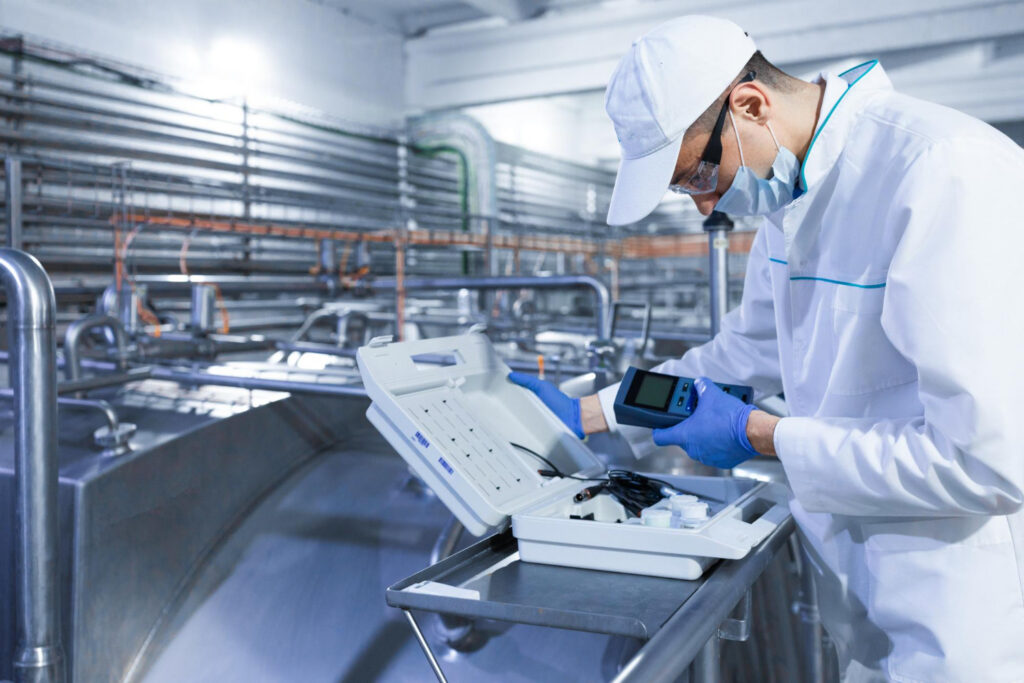
Maintaining the right temperature in a hospital: a clinical, operational, and regulatory issue
In a hospital, temperature is never a minor detail.
It affects patient health, medication stability, laboratory performance, and even the spread of pathogens. Yet thermal management remains a daily challenge: complex buildings, constant flows of people, heat-generating equipment, and strict regulatory requirements.
At a time when healthcare facilities are striving to improve quality of care while managing resources efficiently, reliable environmental monitoring has become essential.
Temperature: a critical parameter for patient care
A stable and controlled environment directly contributes to patient comfort and recovery.
Some patients are particularly sensitive:
- Oncology patients, who may experience temperature intolerance related to treatment
- Burn patients, whose thermoregulation is impaired
- Elderly patients, who are more vulnerable to temperature fluctuations
- Patients in isolation, where any environmental change may affect their condition
Precise temperature control is therefore not simply a matter of comfort, but a matter of genuine clinical safety.
Temperature, humidity, pressure: the balance that helps protect against infection
Thermal control is not limited to preventing spaces from becoming too hot or too cold.
In a hospital, temperature, relative humidity, and differential pressure form an ecosystem.
Air that is too humid encourages the growth of microorganisms.
Air that is too dry irritates the respiratory tract and increases particle transmission.
Poor differential pressure control facilitates unwanted air transfers between areas.
Keeping these parameters under control helps limit:
- Airborne dissemination
- Cross-contamination risks
- Bacterial proliferation in sensitive areas
An EMS makes it possible to visualize this balance in real time and act before conditions become critical.
Medicines, vaccines, devices: thermal stability that allows no drift
Hospital pharmacies face a simple reality:
Most healthcare products react immediately to temperature variation.
Even a short excursion can lead to:
- Loss of efficacy
- Degradation or chemical reaction
- Reduced shelf life
- Regulatory non-compliance (GDP, audits, inspections)
Precise, historical, and traceable monitoring is essential to provide evidence during:
- Internal audits
- Regulatory inspections
- Quality investigations
This is where systems such as Mirrhia Institute play an essential role: ensuring that every excursion is detected, documented, and corrected before it has any clinical impact.
In hospital laboratories, temperature directly influences results
In a laboratory, a difference of just a few degrees can:
- Distort a reaction
- Degrade a reagent
- Alter a sample
- Make a result unusable
Reproducibility, analytical accuracy, and reliability therefore depend on a stable environment, including:
- Refrigerators
- Freezers
- Incubators
- Pre-analytical areas
- Preparation zones
Mirrhia Institute makes it possible to document the entire environmental cycle, ensuring that every result is based on controlled conditions.
Assisted reproduction units: an especially sensitive environment
In medically assisted reproduction (MAR) centres, controlling environmental conditions is even more critical.
Embryos, oocytes, and sperm cells are extremely sensitive to temperature, humidity, and air quality variations. In IVF laboratories, even a slight deviation in temperature or environmental conditions can affect cell viability and compromise an entire treatment cycle.
Incubators, embryo handling rooms, cryopreservation areas, and preparation zones therefore require continuous and documented monitoring.
An EMS helps ensure:
- Stability of incubators and cold chambers
- Full traceability of environmental conditions
- Immediate detection of critical excursions
In these environments, where each sample represents a parental project, the reliability of environmental data becomes a key component of quality and patient safety.
The practical challenges faced by modern hospitals
Maintaining stable conditions across an entire healthcare facility is far from simple:
- Older buildings combined with newer extensions
- Complex and variable airflow patterns
- Technical equipment generating heat or humidity
- Frequent door openings
- Extreme weather conditions
- Tight energy budgets
Without reliable monitoring, it becomes difficult to understand:
- Where deviations begin
- How they evolve
- Whether they are isolated or structural
- What impact they have on critical areas
An EMS provides the continuous visibility that hospital infrastructures often lack.
How an EMS provides a practical answer
An environmental monitoring system such as Mirrhia Institute provides:
Continuous monitoring
Real-time data, multi-site visualization, intelligent alerts.
Trend analysis
Detection of slow drifts, failure prevention, energy optimization.
Traceability and compliance
Complete history, automated reports, regulatory justification.
Protection of critical areas
Operating theatres, sterilization units, pharmacies, laboratories, storage, transport.
Risk reduction
Fewer excursions, fewer product losses, fewer non-conformities.
In other words: proactive control rather than delayed reaction.
To sum it up…
In hospitals, temperature is never isolated: it interacts with humidity, pressure, airflow, microbiological quality, product stability, and patient comfort.
To guarantee a safe, compliant, and efficient environment, healthcare facilities must rely on systems capable of monitoring, understanding, and anticipating environmental conditions.
That is exactly where Mirrhia brings value.
Would you like to strengthen environmental control in your hospital?
Discover how Mirrhia Institute helps secure critical areas, simplify audits, and ensure continuity of care.
Request a personalized demo.